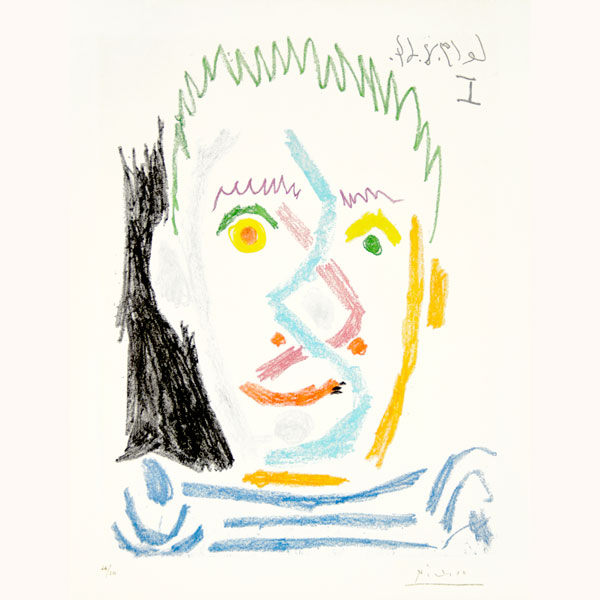
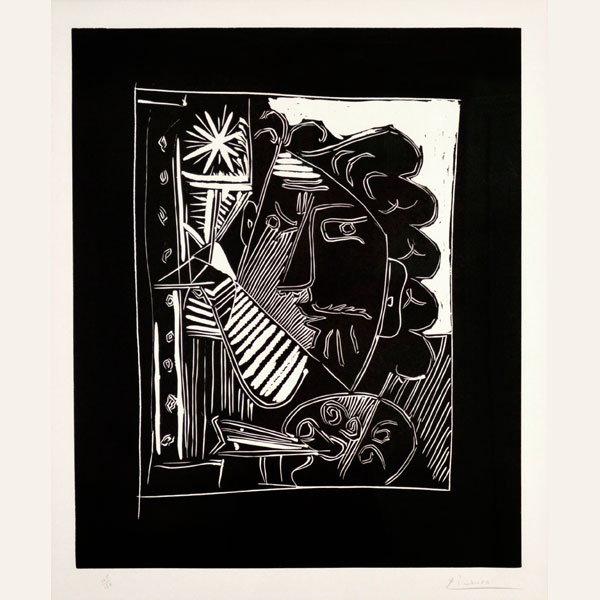


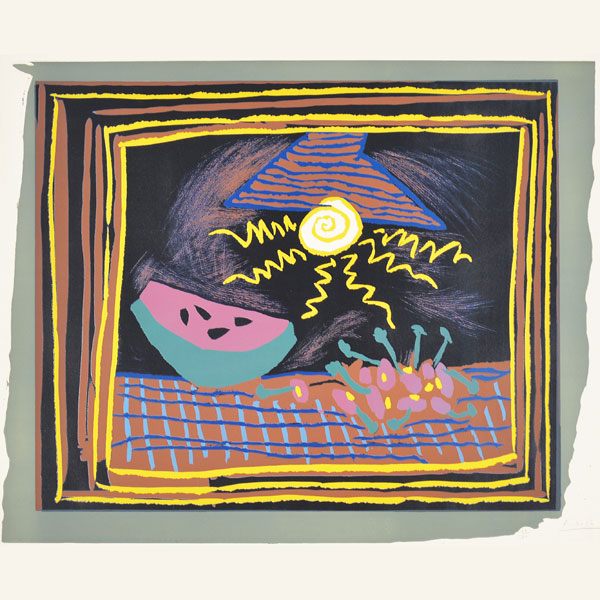
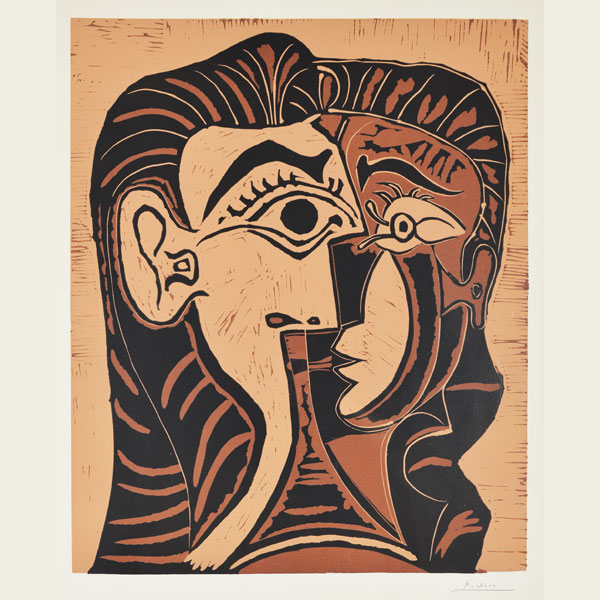
If you own a Pablo Picasso artwork and are unsure whether it is original, the first step is to determine exactly what type of work you have.
Picasso worked across paintings, drawings, lithographs, linocuts, etchings, aquatints, ceramics, sculpture and other media. He also authorized numerous editioned works, publications and exhibition images during his lifetime.
As a result, identifying a Picasso requires more than looking for a signature.
Important evidence can include:
- Catalogue raisonné references
- Medium and printing technique
- Dimensions
- Paper or support
- Edition number
- Proof designation
- Printer or publisher
- Workshop stamps
- Madoura markings
- Signature and inscriptions
- Provenance
- Exhibition history
- Gallery labels
- Previous auction records
- Published literature
We evaluate Picasso artworks individually and can help determine what type of work you own, whether it corresponds with a documented Picasso work or edition, and whether it may be appropriate for valuation or a confidential direct purchase offer.
Have a Pablo Picasso You Would Like Identified?
Send us clear photographs of the artwork, including the front, reverse, signature, edition number, labels, stamps or other markings.
You do not need complete documentation before contacting us.
Photographs and basic ownership information are often enough for us to begin researching the work.
Is My Picasso Original?
There is no single test that can determine whether every Picasso artwork is original.
The appropriate research depends on the medium.
A Picasso painting may need to be compared with scholarly catalogues, provenance and exhibition history, while a lithograph may be identified through Mourlot and Bloch references.
A Picasso ceramic may instead be researched using its Alain Ramié A.R. number, form, dimensions and Madoura markings.
The goal is to determine whether the physical artwork corresponds with a documented Picasso work, edition, proof or state.
A Picasso Signature Alone Does Not Prove Authenticity
One of the most common mistakes is assuming that a Picasso signature automatically proves that an artwork is original.
It does not.
Signatures can be copied, printed, added later or appear on reproductions.
At the same time, some authentic Picasso editions were issued unsigned.
For that reason, signature should be considered together with:
- Catalogue references
- Medium
- Paper or support
- Dimensions
- Edition information
- Printer or publisher
- Workshop markings
- Provenance
- Other physical characteristics
The entire artwork should correspond with the documented work or edition.
Which Picasso Catalogue Raisonné Should I Check?
Different types of Picasso artwork are researched using different catalogue references.
Picasso Paintings and Drawings
The Christian Zervos catalogue raisonné is one of the principal scholarly references for Picasso paintings and drawings.
A Zervos reference may help establish:
- Title
- Date
- Medium
- Dimensions
- Known image of the work
- Relationship to Picasso’s documented oeuvre
For important unique works, provenance, exhibition history, literature and specialist examination may also be essential.
Picasso Lithographs
Picasso lithographs are commonly researched using Fernand Mourlot and Georges Bloch references.
These catalogues can help identify:
- Exact image
- Edition
- State
- Paper
- Dimensions
- Printer
- Publisher
- Signature status
Two visually similar lithographs can belong to different editions and have very different market values.
Picasso Linocuts
Picasso linocuts are commonly identified through Georges Bloch and Brigitte Baer references.
These can help distinguish among:
- Signed editions
- Unsigned editions
- Trial proofs
- Artist’s Proofs
- Printer’s Proofs
- Bon à tirer impressions
- Different states
Many important Picasso linocuts were printed by Hidalgo Arnéra in Vallauris.
Picasso Etchings and Other Prints
Bloch and Baer references are also important for many Picasso etchings, aquatints, drypoints and other graphic works.
State, edition, paper, printer and proof designation can all matter.
Picasso Ceramics
Picasso’s editioned ceramics are primarily identified using Alain Ramié’s catalogue raisonné and are generally referred to by an A.R. number.
The A.R. reference can help establish:
- Design
- Date of conception
- Form
- Dimensions
- Edition size
- Technique
- Known workshop markings
How Can I Tell If a Picasso Print Is Original?
An original Picasso print is an artwork created through a printmaking process associated with Picasso rather than simply a photographic reproduction of one of his images.
Depending on the work, an original Picasso print may be a:
- Lithograph
- Linocut
- Etching
- Aquatint
- Drypoint
- Engraving
- Combination of printmaking techniques
To identify the work, we may compare:
- Catalogue raisonné reference
- Printing technique
- Paper
- Image dimensions
- Sheet dimensions
- Signature
- Edition number
- Proof designation
- Printer
- Publisher
- Provenance
A print should correspond with the known specifications of the documented edition.
Original Picasso Print vs. Reproduction
Picasso imagery has been reproduced extensively.
A reproduction may look convincing in a photograph but belong to a completely different market from an original Picasso print.
Possible categories include:
- Original signed limited-edition print
- Original unsigned edition
- Artist’s Proof
- Printer’s Proof
- Working or state proof
- Original book lithograph
- Exhibition edition
- Poster
- Offset reproduction
- Photomechanical reproduction
- Later decorative reproduction
The presence of Picasso’s name or signature in the image does not by itself establish which category the work belongs to.
Correct identification requires comparison with documented editions and physical characteristics.
Can an Unsigned Picasso Be Original?
Yes.
Not every authentic Picasso print or edition was hand signed.
Documented unsigned works include some:
- Lithographs
- Book illustrations
- Exhibition editions
- Posters
- Published print editions
An unsigned Picasso should therefore not automatically be dismissed as a reproduction.
However, a signed limited edition and an unsigned published version of a related image may have very different values.
The exact work must be identified first.
What Does a Picasso Edition Number Mean?
Many Picasso prints were issued in limited editions.
A typical edition number may appear in a format such as:
25/50
This usually indicates an individual impression within an edition of 50.
Other impressions may carry proof designations rather than standard edition numbers, including:
- E.A. or Épreuve d’Artiste
- Artist’s Proof
- Printer’s Proof
- H.C. or Hors Commerce
- Bon à tirer
- Trial proof
- State proof
Proof status does not automatically make a work more valuable.
Rarity, image, condition, provenance and collector demand should also be considered.
What Should I Look for on the Back of a Picasso Artwork?
The reverse of an artwork can contain important identifying information.
Look for:
- Gallery labels
- Auction labels
- Inventory numbers
- Collector stamps
- Printer stamps
- Publisher stamps
- Exhibition labels
- Handwritten inscriptions
- Old framing labels
- Estate markings
Do not remove labels or markings.
Photograph them clearly because they may help reconstruct provenance or identify the exact work.
How Can I Tell If a Picasso Ceramic Is Original?
Picasso ceramics require a different approach from prints and paintings.
Important identifying factors include:
- Alain Ramié A.R. number
- Form
- Dimensions
- Ceramic body
- Decoration
- Glaze
- Edition number
- Workshop stamps
- Provenance
Common Picasso ceramic markings include:
- Madoura Plein Feu
- Edition Picasso
- Empreinte Originale de Picasso
- d’Après Picasso
- Poinçon Original de Picasso
The type and placement of the markings can vary depending on the edition.
A correct-looking stamp alone should not be treated as definitive proof.
The stamp should correspond with the documented A.R. reference, dimensions, form, decoration and edition structure.
What Is a Madoura Stamp?
Madoura was the pottery workshop in Vallauris where Picasso developed much of his ceramic work.
Editioned Picasso ceramics produced there can carry several different Madoura-related stamps and markings.
These markings can help identify the type of ceramic edition, but they changed over time and differ among works.
The correct stamp should therefore be evaluated in relation to the specific A.R. number rather than treated as a universal authenticity mark.
How Do I Identify an Original Picasso Painting?
Paintings and other unique works generally require more extensive research than editioned prints.
We may review:
- Zervos reference
- Date
- Medium
- Support
- Dimensions
- Signature
- Inscriptions
- Provenance
- Gallery labels
- Exhibition history
- Published literature
- Previous auction history
- Condition
For significant works, physical examination and additional scholarly research may be necessary.
A painting that does not immediately appear in a catalogue should not automatically be declared authentic or inauthentic based solely on photographs.
Why Is Provenance Important?
Provenance is the documented ownership history of an artwork.
It may include:
- Purchase invoices
- Gallery records
- Auction records
- Estate documents
- Collector history
- Exhibition labels
- Museum records
- Correspondence
- Old photographs
- Published literature
For an important unique Picasso work, strong provenance can be especially valuable because it helps establish how the artwork moved from one owner to another.
For editioned works, provenance can also support identification and marketability.
What If My Picasso Has No Provenance?
A lack of paperwork does not automatically mean a Picasso is not original.
Many artworks have been inherited or held by families for decades without complete documentation.
If you have no formal provenance, gather anything that may help establish the history of the work, including:
- Family photographs
- Old insurance schedules
- Appraisals
- Receipts
- Letters
- Framing invoices
- Gallery labels
- Auction stickers
- Names of previous owners
- Approximate purchase date and location
Even seemingly minor information can help guide research.
Does a Certificate of Authenticity Prove My Picasso Is Real?
Not necessarily.
The value of a certificate depends on who issued it and what evidence supports it.
A generic certificate should not replace:
- Catalogue raisonné research
- Provenance
- Correct edition information
- Physical examination
- Recognized scholarly documentation
When evaluating a Picasso, the artwork and supporting evidence should be reviewed together.
Common Red Flags When Evaluating a Picasso
Potential concerns can include:
- Signature inconsistent with the documented edition
- Incorrect dimensions
- Wrong paper or support
- Edition number inconsistent with catalogue information
- Incorrect printer or publisher
- Ceramic stamp inconsistent with the A.R. reference
- Missing expected physical characteristics
- Reproduction printing rather than the documented technique
- Altered or fabricated labels
- Provenance that cannot be supported
- Claims based only on a certificate with no scholarly basis
One red flag does not always prove that a work is inauthentic, but inconsistencies should be investigated before establishing value.
Should I Remove My Picasso From the Frame?
Usually, not immediately.
If the artwork is framed, begin by sending photographs of the front and any visible reverse labels.
Do not remove a valuable work from an old or complicated frame unless you are comfortable doing so safely.
If examination outside the frame is necessary, professional handling may be preferable.
Should I Clean or Restore My Picasso Before Having It Evaluated?
Generally, no.
Do not clean, bleach, repaint, trim, repair or restore a Picasso before obtaining specialist advice.
For prints, cleaning or trimming can affect the sheet.
For paintings, unnecessary conservation can alter the surface.
For ceramics, filling or repainting damage can make condition assessment more difficult.
It is usually better to evaluate the artwork in its current condition first.
Can You Tell If My Picasso Is Original From Photographs?
Photographs can often provide enough information to begin identifying and researching an artwork.
For many editioned prints and ceramics, photographs may allow us to compare catalogue references, dimensions, markings, signatures and edition details.
However, photographs alone may not be sufficient to make a definitive determination for every work, particularly important paintings, drawings or unusual unique works.
If further examination or documentation is necessary, we can explain the next step.
What Photographs Should I Send?
For the most useful initial review, send:
- Full photograph of the front
- Full photograph of the reverse
- Close-up of the signature
- Edition number or proof designation
- Labels and stamps
- Inscriptions
- Full margins for prints
- Base and underside for ceramics
- Dimensions
- Photographs of condition issues
- Any documentation you have
Avoid sending only a close-up of the signature.
The entire artwork is usually much more useful for identification.
What Happens After My Picasso Is Identified?
Once we have enough information to identify the artwork, we can begin evaluating its current market.
We may review:
- Exact catalogue reference
- Edition or state
- Recent comparable sales
- Condition
- Provenance
- Rarity
- Current availability
- Collector demand
For Picasso works we are actively seeking, we may also make a confidential direct purchase offer.
Frequently Asked Questions About Picasso Authenticity
How Can I Check If a Picasso Signature Is Real?
A signature should be compared with the documented artwork rather than evaluated in isolation.
Paper, medium, dimensions, catalogue reference, edition structure, printer, publisher and provenance can be just as important as the signature itself.
Do All Original Picasso Prints Have Edition Numbers?
No.
Some authentic Picasso prints were issued unsigned or unnumbered, while proofs and special impressions may carry designations instead of standard edition numbers.
Are Picasso Posters Worth Anything?
Some Picasso-related posters and exhibition editions can be collectible, particularly documented lifetime examples.
However, they generally belong to a different market from signed limited-edition fine-art prints.
Correct identification is essential.
Do All Picasso Ceramics Have Madoura Stamps?
No single stamp appears on every Picasso ceramic.
Different documented editions may carry Madoura Plein Feu, Edition Picasso, Empreinte Originale de Picasso, d’Après Picasso or other appropriate markings.
Can a Picasso Be Original Without Being in a Catalogue Raisonné?
The absence of an immediately identifiable catalogue reference should not be used by itself to make a definitive authenticity conclusion.
The medium, date, provenance and type of work must be considered, and important unique works may require further scholarly research.
Can I Sell a Picasso Without a Certificate of Authenticity?
Potentially, yes.
Catalogue references, edition information, provenance, workshop markings and specialist research may provide more useful evidence than a generic certificate.
What If I Inherited a Picasso and Know Nothing About It?
Send photographs of the front, reverse, signature, labels, stamps and any documentation or family information you have.
You do not need to know the title or catalogue number before contacting us.
Have Your Pablo Picasso Identified and Valued
If you own a Pablo Picasso painting, print, lithograph, linocut, ceramic, drawing or other artwork, send us photographs and any information you have.
We can help research the exact work, review the relevant catalogue references, edition information, markings, provenance and condition, and determine whether it may be appropriate for valuation or a confidential direct purchase offer.
Request a Pablo Picasso Evaluation
Complete the form below and upload clear photographs of your artwork.
You do not need complete documentation before contacting us. Photographs and basic information are often enough for us to begin researching the work.