

Want to Sell Picasso Vases? Our gallery reviews Madoura ceramic vases, including face designs, animal forms and sculptural vessels, for potential direct purchase. Send photographs for a confidential evaluation of the exact model, A.R. reference, edition, markings, condition and ownership history.
Picasso Ceramic Vases and Sculptural Vessels
Picasso transformed the vase into faces, birds, owls and figures through the shape of the clay and its decoration. Working with the Madoura pottery in Vallauris, he explored handled vessels, rounded bodies and architectural forms, often extending the image around the entire object.
These vases belong to different designs and editions. A title alone cannot establish the model: related works may share a name while differing in decoration, catalogue reference and edition size.
Selected Picasso Vases
These six examples show a range of documented Madoura vase designs. We also review other Picasso vessels and variants.



Picasso Vase Editions and A.R. References
| Vase design | Reference | Edition size |
|---|---|---|
| Vase Deux Anses Hautes, 1952 | A.R. 141 | 400 |
| Gros Oiseau Picasso, 1953 | A.R. 185 | 75 |
| Vase au Décor Pastel, 1953 | A.R. 190 | 200 |
| Personnages et Têtes, 1954 | A.R. 242 | 25 |
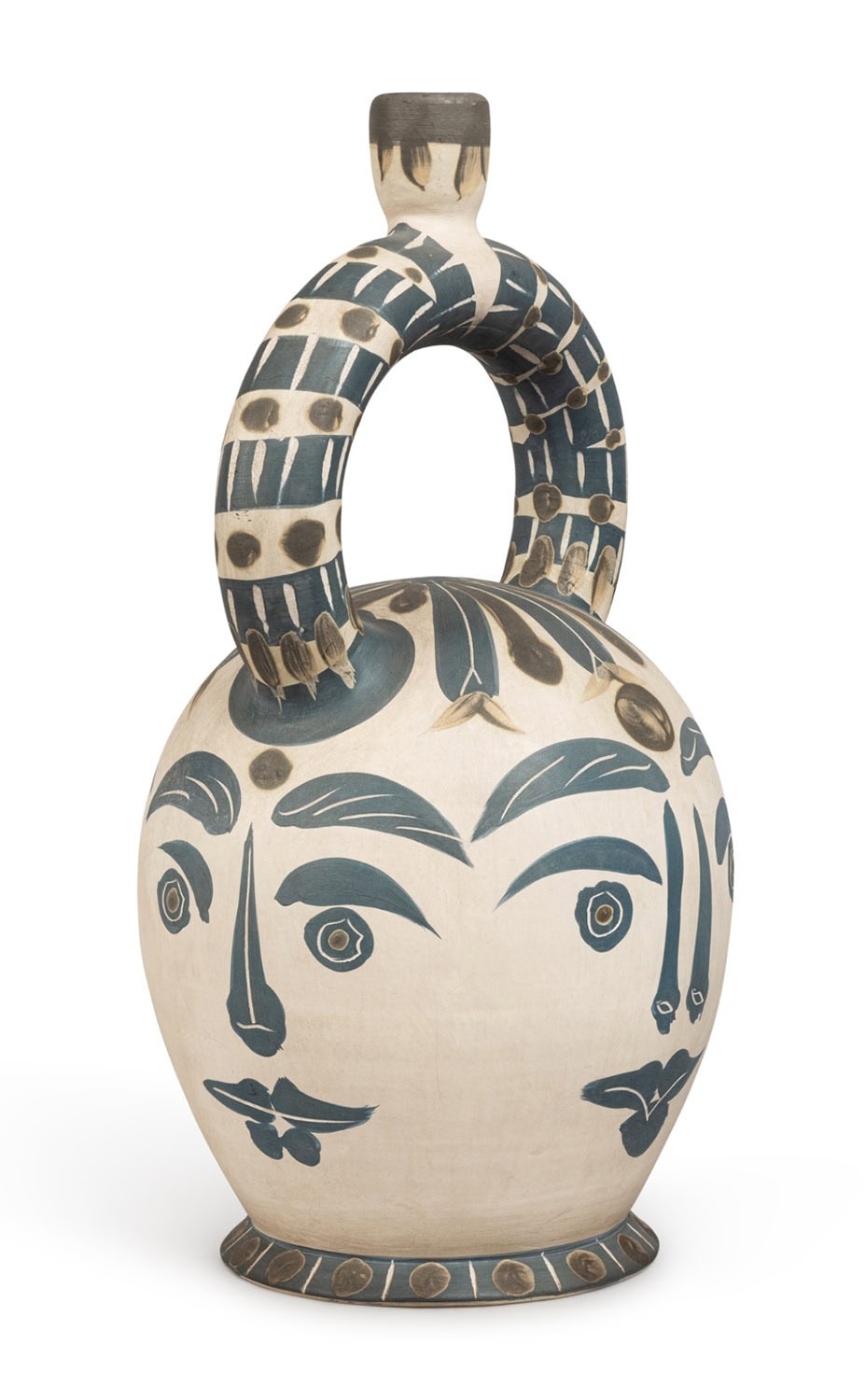
| Vase Aztèque aux Quatre Visages, 1957 | A.R. 402 | 100 |
| Chouette (Wood-Owl), 1969 | A.R. 605 | 500 |
An A.R. number identifies a design in Alain Ramié’s catalogue of Picasso’s edited ceramics. It is different from an individual edition number. The references above apply to the illustrated models; proofs, publisher’s examples and documented variants require separate checking.
Compare the form and decoration
Photograph every side, including the handles, neck, rim and base. For example, related Vase Aztèque aux Quatre Visages designs have different A.R. references and editions. The blue-and-white example illustrated here is A.R. 402, from an edition of 100.
Read the markings in context
Marks may include Madoura Plein Feu, Edition Picasso or Empreinte Originale de Picasso, depending on the model. Look for inscriptions underneath and, where safely visible, inside the vessel. These marks differ from a personally applied artist’s signature and must be assessed alongside the ceramic itself.
Materials, dimensions and production
Picasso vases include white earthenware and red terracotta, with decoration and surface finishes varying by model. Some use painted slips and glaze; others feature pastel decoration. Record height, maximum width and depth, including handles. The catalogue’s conception date identifies the design and may differ from its production date.
Condition, repairs and alterations
Include close-ups of rim chips, handle joins, cracks, repairs and surface wear. Mention any lamp conversion, drilled hole or replaced fitting. Firing features and later damage require different assessments. Avoid cleaning, polishing or repairing the vase before its condition has been reviewed.
For more information, visit our Picasso ceramics guide.
How Much Is My Picasso Vase Worth?
Value depends on the exact model, edition, decoration, condition and provenance. Size or a small edition alone does not establish a higher value. See our Picasso value guide or send photographs for an individual evaluation.
How to Sell Your Picasso Vase
- Send photographs and measurements. Include all sides, the base, stamps, edition markings and any damage. Add invoices, gallery labels or earlier descriptions if available.
- Receive a gallery review. We research the model, catalogue reference, edition and supporting records, then explain whether further examination is needed.
- Discuss a potential purchase. If the vase fits our current acquisitions, we can discuss an offer and practical arrangements for completing the sale.
You do not need to know the title or A.R. number before contacting us. Phone photographs and the information you already have are enough to begin an inquiry.
Picasso Vase FAQs
Were all Picasso vases personally painted by Picasso?
No. Authorized Madoura editions were produced by the workshop after Picasso’s designs. An editioned vase should not automatically be described as a unique, personally painted work.
Does every original vase have a handwritten signature?
No. Many documented editions carry workshop stamps, inscriptions and edition markings. The expected markings depend on the specific model.
Can I submit a vase that was converted into a lamp?
Yes. Photograph the whole object, fittings and any visible alterations. A conversion affects the condition review, but you can still submit the vase for consideration.
Do I need a certificate before contacting you?
No. Send photographs and whatever documentation you have. An invoice, old gallery label or earlier catalogue description can help us begin researching the vase.
Have a Picasso Vase to Sell?
Send photographs for a confidential gallery evaluation and consideration for direct purchase.